Clear answers before your treatment plan begins
Effective treatment starts with knowing exactly what is causing your pain. At Chicago Center for Sports Medicine and Orthopedic Surgery, imaging and nerve testing are available at our Chicago and Tinley Park offices, so your doctor can assess your injury or condition and build a treatment plan around what the results show.
Request an AppointmentTesting that supports an accurate diagnosis
Pain, stiffness, numbness and weakness can come from many different sources. Two injuries that feel alike may need very different care. Assessment and testing show what is happening inside the joint, bone, muscle or nerve, whether the problem came from an accident, a sports injury, overuse or an illness. Your physician reviews the results alongside your history and physical exam to decide on your next steps.
We offer the following tests:
- X-Ray
- Ultrasound
- EMG
- Fluoroscan
X-Ray
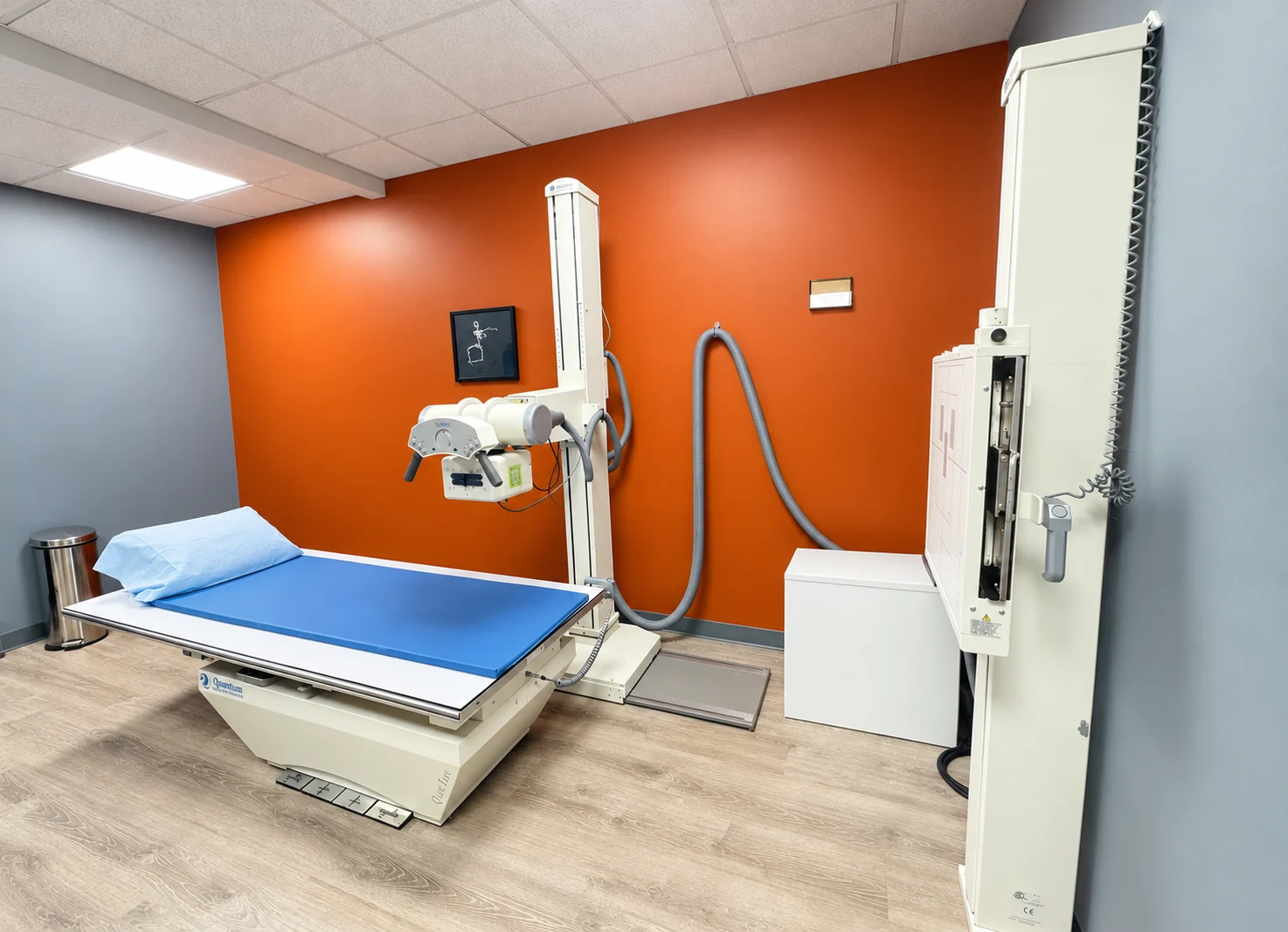
X-rays are often the first step in evaluating an injury. They show bones and joints clearly, which helps identify fractures, dislocations, arthritis and changes in alignment. They can also help your doctor rule out a bone injury when the problem lies in the surrounding soft tissue.
Ultrasound
Ultrasound uses sound waves to create real-time images of soft tissues such as tendons, ligaments, muscles and fluid around a joint. It is useful for evaluating tendon and soft-tissue injuries, and it can help guide certain treatments. Because it is radiation-free, it is a practical option for many patients.
EMG
An electromyography (EMG) test measures the electrical activity of your muscles and the nerves that control them. It helps your physician determine whether symptoms such as tingling, numbness, burning or weakness are coming from a nerve problem. It can also show where a nerve may be compressed or irritated, which is especially helpful for conditions affecting the hands, arms, neck and back.
Fluoroscan
A fluoroscan provides live, moving X-ray images. Your doctor can see a joint or structure in motion, or use the imaging to place a needle accurately during certain procedures. This real-time view adds precision to both diagnosis and treatment.
How testing fits into your care
Your results guide every step that follows. Depending on what we find, your plan may include non-operative procedures, physical therapy, or a referral to one of our surgeons for orthopedic surgery when it is the right option. Having testing and treatment under one practice means fewer handoffs and a clearer path from diagnosis to recovery. You can learn more about the physicians who will review your results on our team page.
Two convenient locations
Both of our offices are open Monday through Friday, 8:00 am to 4:30 pm, and closed on weekends. Call (708) 263-2000 - Chicago Office or (708) 263-2000 - Tinley Park Office to ask about testing at our Tinley Park office at 7543 183rd St or our Chicago office at 1301 E 47th St.
Diagnostic Testing FAQs
What types of diagnostic tests do you offer?
We offer X-ray, ultrasound, EMG and fluoroscan testing. Together, these tests let us evaluate bones, joints, soft tissues and nerves so we can understand the cause of your pain or injury.
Do I need a referral for diagnostic testing?
Testing is usually ordered by your physician after an evaluation, so it is matched to your symptoms. Call us at (708) 263-2000 and our team can explain how to get started and whether your insurance requires anything for your visit.
Will I have to go to a separate imaging center?
For the tests we offer, no. Testing is available on-site at our Chicago and Tinley Park offices, which keeps your evaluation and treatment planning within one practice.
How do I know which test is right for me?
Your doctor will choose tests based on your symptoms, your medical history and a physical exam. X-rays are often used for bone and joint concerns, ultrasound for soft tissue, EMG for suspected nerve problems, and fluoroscan when live imaging is needed.
What is an EMG test, and is it uncomfortable?
An EMG measures the electrical signals in your muscles and nerves. It helps identify nerve irritation or compression. Some patients feel mild discomfort from the small needle electrode or the brief electrical impulses, but the test is generally well tolerated. Your provider will explain each step before starting.
Is ultrasound safe?
Ultrasound uses sound waves rather than radiation to create images, so it is a safe option for many patients. Your doctor will recommend it when it can give useful information about your tendons, ligaments, muscles or joints.
What happens after my testing is complete?
Your physician reviews the results with you and explains what they mean. From there, we build a treatment plan that may include physical therapy, non-operative procedures or, when appropriate, surgical care.
Get the answers you need to move forward
Whether you are in Chicago or Tinley Park, our team is ready to evaluate your pain or injury and explain your options. Call (708) 263-2000 - Chicago Office or (708) 263-2000 - Tinley Park Office or request a visit online. New to our practice? See our new patient information to know what to expect.